
What is 0G?
0G is positioning itself as a next-generation Layer-1 blockchain built specifically for the intersection of AI and Web3. Rather than focusing purely on smart contracts or DeFi, the project introduces what it calls a decentralized AI operating system (deAIOS) — a modular architecture that combines storage, compute, execution, and data availability layers to support AI workloads at scale.
The 0G token lies at the center of this ecosystem, used for transaction fees, staking rewards, governance, and incentivizing participants across the network. With a strong emphasis on infrastructure, 0G aims to become the backbone for decentralized AI applications.
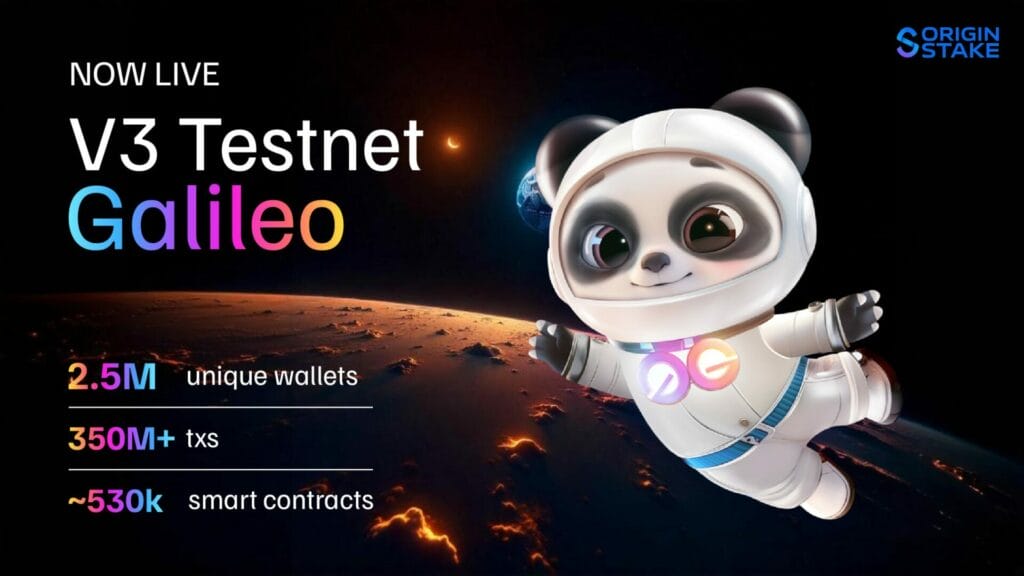
The project officially went live with its Aristotle Mainnet on September 22, 2025, . Prior to this, the team had run a large-scale testnet (Galileo) to benchmark throughput, finality, and stability.
The scale of the launch was matched by the financial weight behind the project. 0G has raised approximately $357 million across several funding rounds, including node sales and private placements, putting it among the best-capitalized blockchain launches of the year.
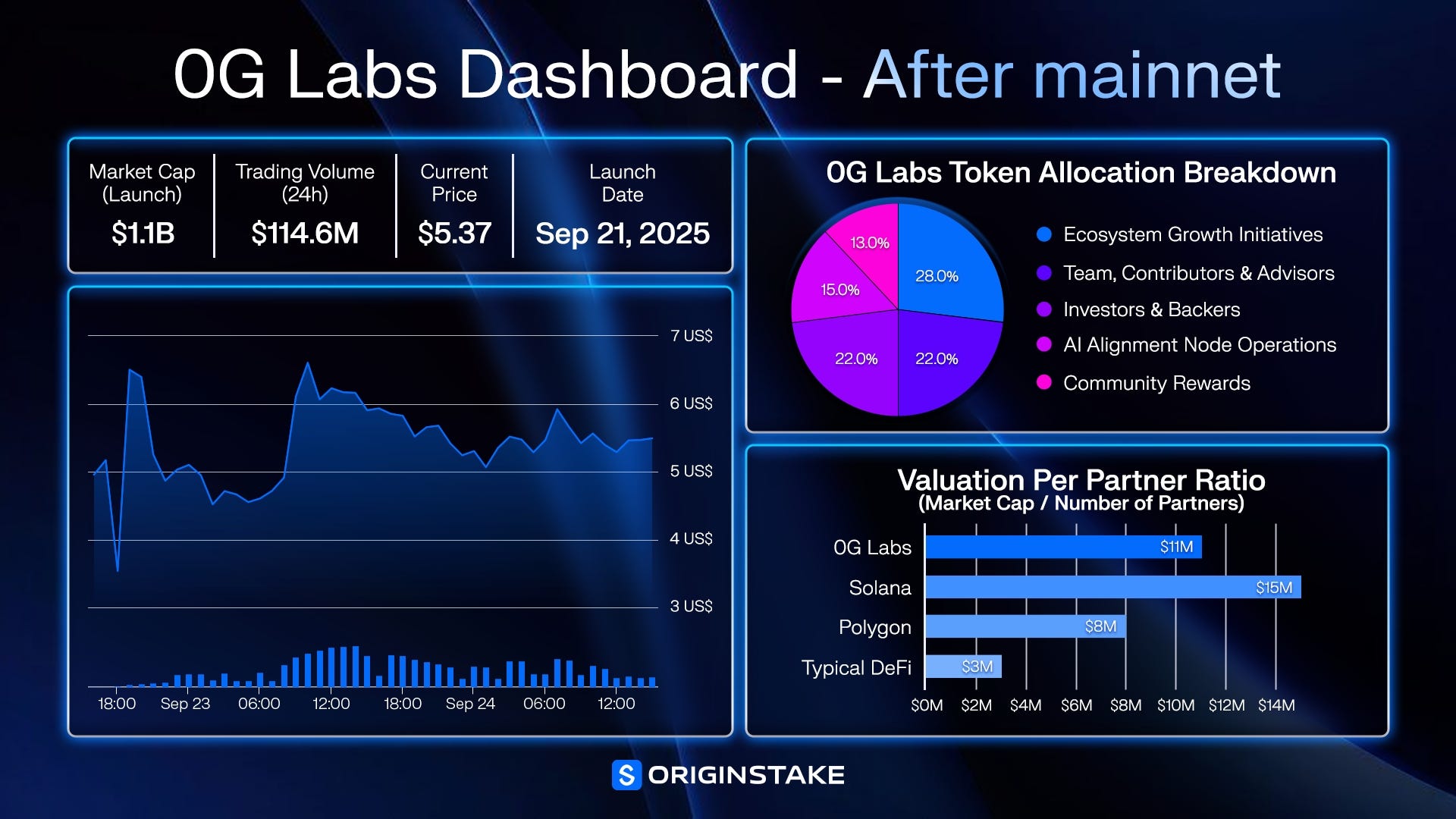
According to current data, the network’s tokenomics are structured around a maximum supply of one billion 0G tokens. At the time of launch, roughly 213 million tokens — just over 21 percent of the total — were in circulation. This places the project’s market capitalization in the range of $770 to $800 million, while the fully diluted valuation stands at approximately $3.6 to $3.7 billion.
The gap between circulating market cap and FDV highlights one of the key dynamics investors will be watching closely: the schedule of token unlocks. As additional tranches of tokens are released into the market over the coming months and years, supply-side pressure could weigh on price action, even as demand for AI-focused infrastructure continues to grow.
With such valuations and supply dynamics, is 0G worth investing in at this stage?
Scoring Table
After thinking about the formula, this piece applies a structured valuation formula to assess how much the project is “worth” today. The goal is not to predict exact price targets, but to benchmark fundamentals, tokenomics, and risks against a systematic scoring framework. By weighting categories such as token utility, team quality, technology, and competitive positioning, we arrive at a composite score that guides investment outlook.
Methodology:
Scores are based on a mix of quantitative and qualitative indicators. Quantitative inputs include token price, supply, market capitalization, financing commitments, and on-chain activity when available.
Qualitative assessments evaluate team experience, technological differentiation, roadmap clarity, competitive dynamics, and investor backing. Each category was assigned a score from 1 (poor) to 10 (excellent), then weighted according to its relative importance in long-term value creation. Categories with limited or no reliable data were conservatively scored to avoid overstating strength. This ensures comparability across projects while acknowledging the early-stage uncertainties of decentralized AI infrastructure.
We use the following weighted formula:
Final Score = (Market×0.09) + (Tech×0.15) + (Team×0.12) + (Growth×0.08) + (Runway×0.06) + (Token×0.20) + (Competition×0.05) + (Partnerships×0.05) + (Milestones×0.04) + (Risks×0.08) + (Community×0.04) + (Chart×0.04)
Each category is rated 1–10, with weightings reflecting importance. Token utility carries the largest weight (20%), while chart technicals and community carry lighter weightings (4%).
- Addressable Market & Value Proposition (7.5/10): AI-first OS narrative is strong, but adoption must prove real-world demand.
- Technology & Differentiation (8/10): Innovations like Proof-of-Random-Access for storage and modular DA stand out.
- Team & Backers (8/10): Strong venture backing and financing commitments, though advisor visibility is limited.
- Growth Metrics (5/10): GitHub activity is clear, but no TVL or revenue traction yet.
- Runway (8/10): $290M in combined equity and token financing ensures multi-year survival.
- Token Utility & Tokenomics (7/10): Multiple utilities, with vesting mechanisms mitigating unlock risks.
- Competition Positioning (6/10): Crowded market with Bittensor, Akash, Celestia as rivals.
- Partnerships & Ecosystem (8/10): Over 100 partners across infra, wallets, and cloud providers.
- Milestones & Catalysts (7/10): Service Marketplace beta in Q4 2025 is the key upcoming event.
- Risks (6/10): Execution, supply overhang, and regulatory uncertainties remain pressing.
- Community & Socials (8/10): Strong engagement during launch, boosted by Binance and Kraken listings.
- Chart Technicals (5/10): Typical post-TGE volatility; price halved after listing.
Therefore, the scoring will be:
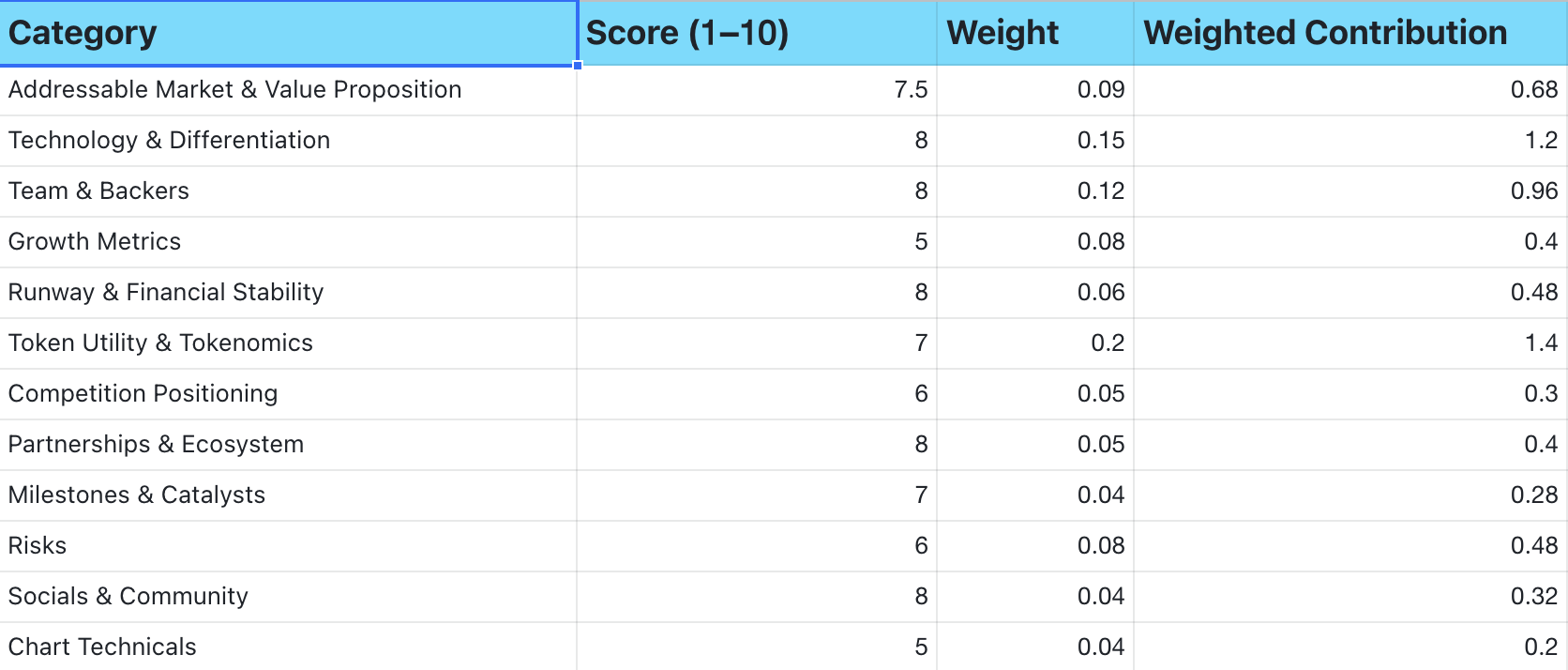
Applying the formula:
- Market (7.5 × 0.09) = 0.68
- Tech (8 × 0.15) = 1.20
- Team (8 × 0.12) = 0.96
- Growth (5 × 0.08) = 0.40
- Runway (8 × 0.06) = 0.48
- Tokenomics (7 × 0.20) = 1.40
- Competition (6 × 0.05) = 0.30
- Partnerships (8 × 0.05) = 0.40
- Milestones (7 × 0.04) = 0.28
- Risks (6 × 0.08) = 0.48
- Community (8 × 0.04) = 0.32
- Chart (5 × 0.04) = 0.20
Total = 6.98 / 10
A score of ~7/10 positions 0G as a solid, but early-stage, bet. Its strengths are in technology, funding, and ecosystem breadth. Its weaknesses lie in growth numbers and competitive risk. With a circulating market cap around $770M and FDV of $3.6B, current pricing bakes in high expectations.
To put the score in context: projects that typically achieve above 8/10 on this framework already demonstrate meaningful fee generation or TVL traction. Scores between 6 and 7 usually indicate credible teams with strong backers but limited proof of product-market fit. Anything below 5 tends to carry red-flag risks such as unclear tokenomics or inactive development.
0G’s 6.98/10 places it right on the edge between “solid” and “exceptional potential,” but the decisive factor will be whether it can translate partnerships into sustained usage.