As blockchain technology evolves, the debate between monolithic and modular architectures has become increasingly relevant. Celestia, a pioneer in modular blockchain design, offers a fresh perspective on scalability, flexibility, and customization. This article delves into the practical differences between Celestia’s modular approach and traditional monolithic blockchains.
Understanding the Architectures
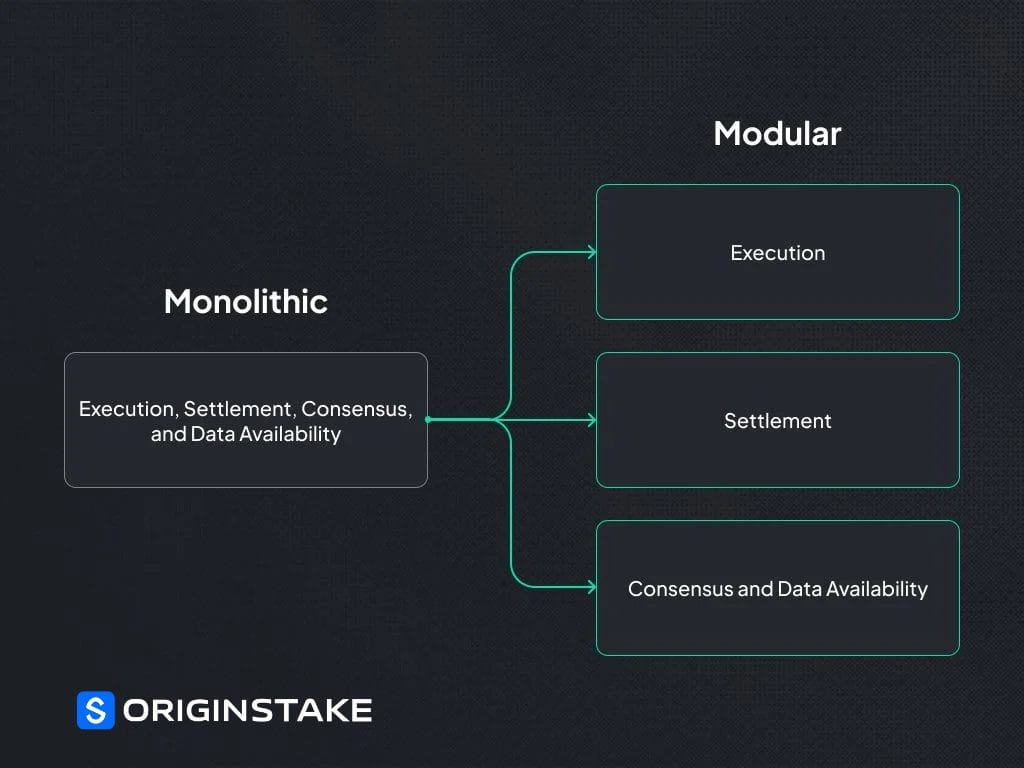
Monolithic blockchains
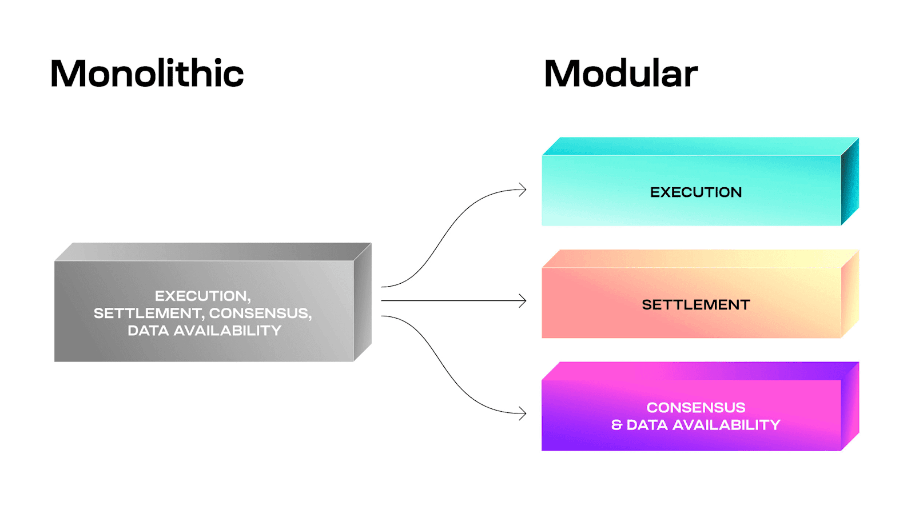
Monolithic blockchains, such as Bitcoin and Ethereum, handle all core functions—execution, consensus, settlement, and data availability—within a single layer. This unified approach simplifies design but can lead to scalability challenges and limited flexibility.
Celestia (Modular blockchains)
In contrast, modular blockchains like Celestia separate these functions into distinct layers. Celestia specializes in providing consensus and data availability, allowing other layers or rollups to handle execution and settlement. This separation enables each layer to optimize its specific function, enhancing overall system performance.
Key differences
| Features | Monolithic blockchain | Celestia |
| Architecture | Unified layer for all functions | Separate layers for specialized tasks |
| Scalability | Limited by single-layer capacity | Enhanced through parallel processing |
| Flexibility | Rigid structure | High customization for developers |
| Resource Requirements | High for full nodes | Lower due to Data Availability Sampling |
| Developer Autonomy | Constrained by base layer rules | Freedom to design custom execution layers |
Scalability and Efficiency
Monolithic blockchains often face scalability issues as all transactions are processed within a single layer, leading to congestion and higher fees. Celestia addresses this by allowing multiple rollups to operate concurrently, each handling its execution while relying on Celestia for consensus and data availability. This parallel processing significantly enhances throughput and reduces transaction costs.
Developer Flexibility
In monolithic systems, developers must conform to the base layer’s programming languages and protocols. Celestia’s modular design empowers developers to create sovereign rollups with customized execution environments, governance models, and virtual machines, fostering innovation and tailored solutions.
Data Availability and Security
Ensuring data availability is crucial for blockchain security. Monolithic blockchains require full nodes to download entire blocks, which can be resource-intensive. Celestia introduces Data Availability Sampling (DAS), allowing light nodes to verify data availability by sampling small portions of blocks, maintaining security while reducing resource demands.
Real-world Implications
Monolithic Blockchains
Pros: Simplified design, established ecosystems.
Cons: Scalability limitations, higher resource requirements, less flexibility for developers.
Celestia
Pros: Enhanced scalability, lower resource demands, high developer autonomy, and flexibility.
Cons: Relatively new ecosystem, requiring developers to manage additional layers.
Conclusion
Celestia’s modular approach presents a compelling alternative to traditional monolithic blockchains, offering solutions to scalability and flexibility challenges. By decoupling core functions and enabling specialized layers, Celestia provides a robust framework for the next generation of decentralized applications. You want to go deeper on how modular architecture unlocks new possibility? Read this!
For developers and organizations seeking scalable and customizable blockchain solutions, exploring Celestia’s modular architecture could be a strategic move toward future-proofing their applications.

Are you ready to join the Celestia ecosystem? Follow Celestia to stay updated with the latest news and explore staking opportunities with OriginStake to maximize your profits!