
Celestia’s highly anticipated upgrade, Lotus (v4), scheduled for Mainnet Beta activation in June 2025, introduces transformative improvements across tokenomics, staking mechanics, and cross-chain interoperability. Defined under CIP‑33, Lotus consolidates four key protocol upgrades – CIP‑29 through CIP‑32 – building on the infrastructure established by prior updates like Ginger (v3) and Lemongrass (v2).
In a May 19 blog post titled “Introducing the Lotus upgrade: native TIA interop and reduced issuance”, Celestia developers describe Lotus as a strategic evolution designed to sharpen economic incentives, enhance user control, and lay the groundwork for cross-chain functionality.
Lotus v4: Tokenomics, User Control, Vesting, and Native Interoperability
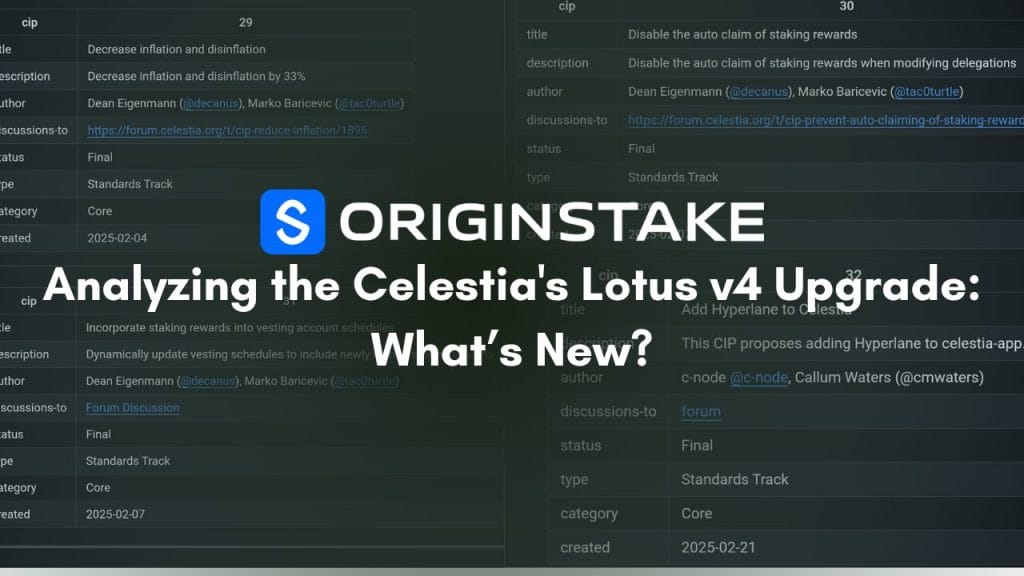
A Leaner Token Economy Through CIP‑29
At the core of Lotus lies CIP‑29, a major shift in Celestia’s monetary policy. The proposal reduces both inflation and disinflation rates by approximately one-third. To illustrate, the inflation rate at 1.5 years post-launch will decrease from roughly 7.2% to around 5.0%, with subsequent years following a similar adjusted schedule. By curbing token issuance while preserving staking incentives, this measure reflects a transition toward a more sustainable economic model, limiting dilution for holders without undermining network security.
Empowering Users with Control: CIP‑30
Another notable enhancement comes via CIP‑30, which removes the automatic claiming of staking rewards embedded in some node interactions. Until now, a change in delegation or withdrawal could inadvertently trigger a payout.
With Lotus, rewards remain in the distribution module until users actively withdraw them via the MsgWithdrawDelegatorReward transaction. This shift grants users finer control over reward timing, providing clarity for tax planning and enhancing personal autonomy.
Aligning Rewards with Redesigned Vesting Rules: CIP‑31
Building on this new control, CIP‑31 integrates staking rewards into existing vesting account schedules. Before Lotus, rewards could be claimed and monetized immediately – even on accounts with vesting. Now, newly accrued staking rewards on such accounts are treated like the locked token balance: they unlock gradually, adhering to the original vesting timeline. To prevent circumventing lock-up through high validator commission rates, this CIP also introduces a 25% maximum validator commission. The result is a vesting framework that reinforces long-term commitment and stakes integrity.
Enabling Native Interoperability: CIP‑32
Perhaps the most forward-looking feature in Lotus is CIP‑32, which embeds Hyperlane into Celestia as a native Cosmos SDK module. Hyperlane supports secure, permissionless cross-chain messaging, linking Celestia to a flourishing ecosystem of over 100 interconnected chains, including Ethereum, Base, and Arbitrum. The implementation adds two new SDK modules – x/core and x/warp – to facilitate TIA token transfers across chains.
Initially, security is managed via a multisig interchain security module (ISM), but there are plans to upgrade to a ZK-based ISM eventually secured by Celestia’s validator set. This cross-chain integration fundamentally positions Celestia as an active participant in the broader modular blockchain ecosystem.
Testnet to Mainnet: A Coordinated Launch
The rollout strategy for Lotus reflects Celestia’s maturity in upgrade coordination. Using the in-protocol signaling mechanism first introduced in Ginger (v3), the upgrade will activate once validators controlling at least five-sixths of voting power signal YES, followed by a structured delay, commonly a week, before execution.
On Arabica testnet, this process already occurred: after validators signaled readiness, Lotus activated at block height 5,975,265 on May 16, 2025, following a one-day delay period. The upgrade then moved to Mocha testnet, which includes a slightly longer delay, likely two days, before the final activation is scheduled for June 2025 on Mainnet Beta, with a seven-day delay timeline.
What Lotus Means for the Ecosystem
Lotus represents more than a set of upgrades – it signifies a leap forward on multiple fronts:
- Economically, a leaner inflation schedule through CIP‑29 protects token value while preserving security.
- User experience improves, thanks to CIP‑30 and CIP‑31, offering greater transparency and autonomy in staking.
- Technologically, CIP‑32 connects TIA to a wider interoperable world via Hyperlane – unlocking new use cases and composability.
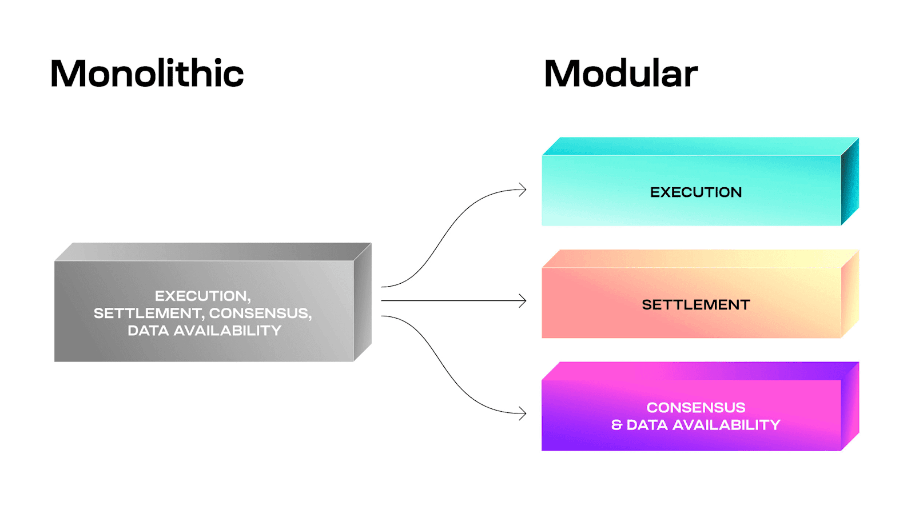
Combined, these updates solidify Celestia’s stance as a forward-thinking modular blockchain, where scalability, innovation, and cross-chain interoperability coexist.
Conclusion
As Lotus moves from testnet into real-world deployment this June, stakeholders – validators, stakers, and developers – should prepare. Node operators need to upgrade software following the official Lotus network upgrade documentation. TIA holders should review any unclaimed rewards, especially on vesting accounts, and consider adjusting staking or delegation actions accordingly. Developers exploring cross-chain use cases can begin leveraging Hyperlane in testing environments such as Arabica and Mocha.
Ultimately, Lotus doesn’t just enhance Celestia – it validates the modular vision it espouses. By fine-tuning tokenomics, decentralizing reward systems, and enabling native cross-chain functionality, Lotus positions Celestia at the heart of a next-generation blockchain landscape.

Are you ready to join the Celestia ecosystem? Follow Celestia to stay updated with the latest news and explore staking opportunities with OriginStake to maximize your profits!